"This site requires JavaScript to work correctly"

your dream study programme is waiting for you

Discover your opportunities at bavaria's most international university of applied sciences

Our study programmes

deggendorf INstitute of technology.

study, research, work

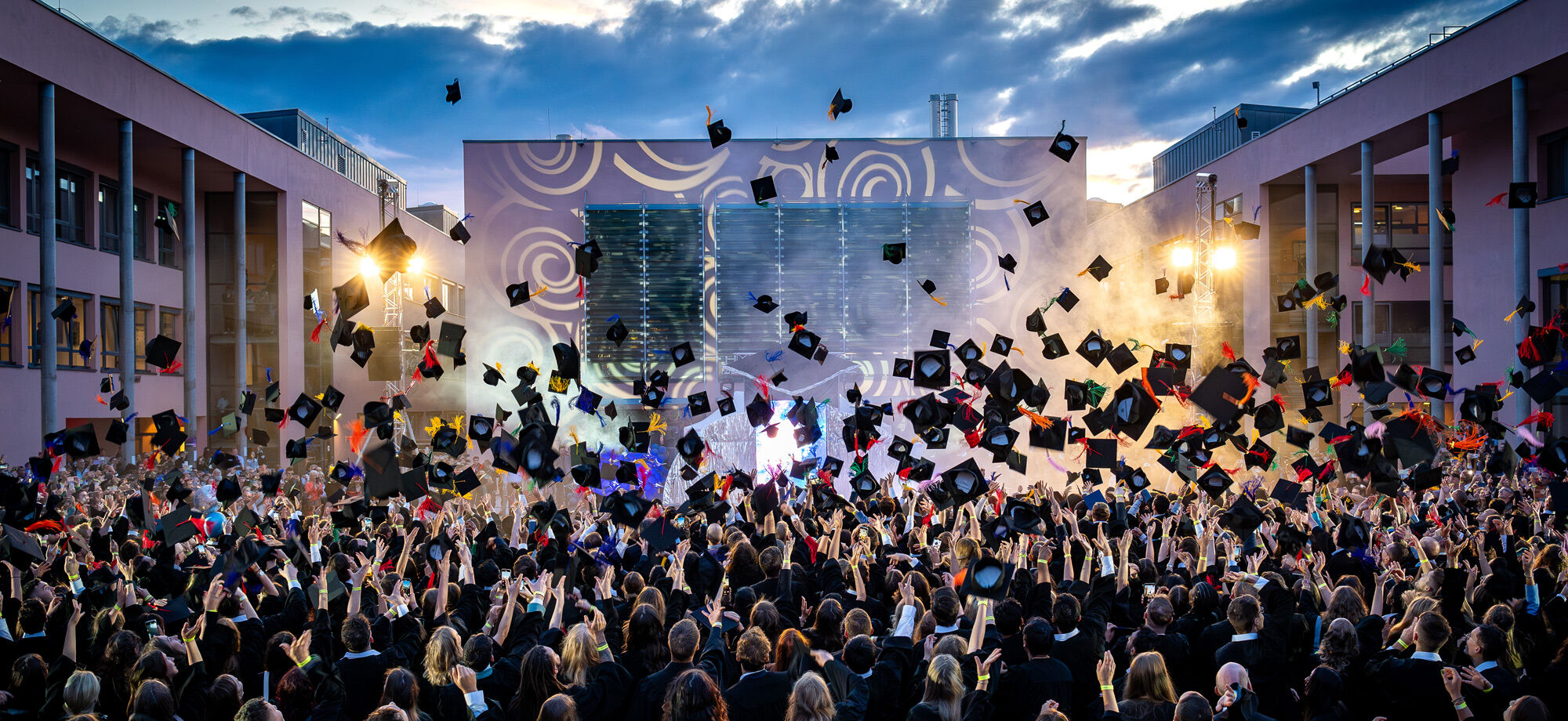
Welcome to our award-winning university where staff and students boldly develop, study, research, teach and innovate. We are a place of endless opportunities and personal stories, created by each individual member of our inspirational university community. Discover our world and let us inspire you, too!


about dit

#count students.


information for potential students

a place to work, teach & research


information for businesses


Starting a business, innovation & transformation


dit stories


events


news

Pressefoto

From November 10th to 20th, the International Office of Deggendorf Institute of Technology (DIT) transformed the campus into a gateway to the world. The Go Global Weeks offered students not only information, but also inspiration and the courage to take the step abroad. A variety of events provided opportunities to learn about exchange programs, internships, and countries, and to alleviate fears through personal experience reports.

Academic Advantage and New Opportunities 

The series was opened with "Ready for Abroad?", an event that gave an overview of the possibilities and advantages of a stay abroad. International experience is not only an academic advantage but also promotes independence and opens up new opportunities, including an international career start. For this purpose, the event "Five Steps to an International Internship" was held, which explained how to successfully start an internship abroad.

Focus on Europe with Erasmus+

A highlight of the first week was the Erasmus+ Day, which focused on the European area within the framework of the Erasmus+ program. An information session on financing, funding opportunities, and application processes was followed by a Meet & Greet with students who reported on their semesters abroad in Spain, Finland, Hungary, and even Aruba.

Global Perspectives and Intercultural Training

The second week broadened the view for global perspectives. The South Korea Workshop was particularly impressive, designed by two Korean exchange students who introduced their homeland, language, and university. This direct exchange conveyed a vivid picture of life in South Korea. This was complemented by an Intercultural Training that sensitized students to cultural differences and prepared them for international situations.

Special Guest from Australia and Experience Reports

The highlight of the second week was the "Go Global" Day. In addition to information on worldwide study options and funding opportunities, the University of the Sunshine Coast from Australia presented itself as a special guest. This day was also rounded off with experience reports from former exchange students about countries like Brazil, Canada, South Korea, and Hawaii.

Emotional and Interpersonal Dimension

The Go Global Weeks 2025 were thus far more than just information events. They conveyed not only facts but also the emotional and interpersonal dimension of a stay abroad. Overall, it was a successful impetus to overcome borders and broaden one's own horizons, both geographically and mentally.

Pressefoto

As part of the BITZ OPEN series of events, the Bavarian Innovation and Transformation Centre (BITZ) at the Deggendorf Institute of Technology (DIT) in Oberschneiding welcomed Dr. Michael Richter from Fraunhofer IGB – Straubing site as keynote speaker on 13 November. His lecture on ‘Bio-inspired Chemistry’ attracted a large and very interested audience and also marked the start of a potential, promising collaboration between the Lower Bavarian institutions.

Dr. Richter presented the innovative approach of bio-inspired chemistry, which promises a fundamental shift towards more sustainable products. This approach differs fundamentally from the synthesis of fossil-based products. At its core, it involves searching for exclusive molecules in nature and integrating them functionally into chemicals and materials as bio-based building blocks in order to create products with a significant functional advantage.

In his presentation, Dr. Richter discussed the development of innovative polyamides from natural terpenes (the main components of essential oils). He also presented novel approaches to the use of proteins for sustainable adhesive systems, using chicken feathers as an example. In the publication ‘An environmentally friendly process for the specific decomposition of chicken feather keratin into polythiol building blocks’, Dr. Richter's research group describes the ‘green’ methodology behind this process.

Finally, the potential of bioelectrocatalysis and its contribution to alternative concepts of electricity-driven enzymatic fine chemical synthesis was discussed.

The event made it clear that there are considerable overlaps and synergies between the neighbouring Lower Bavarian institutions. ‘Both institutions bring solution and acceleration expertise as well as an agile start-up mindset to the table,’ emphasise the hosts. This combined strength opens up the potential to become even more powerful – especially in diverse collaborations with regional companies. The aim is to deepen this cooperation in the near future.

The lively interest in the event confirmed the relevance of the topic: in view of the current challenges in Europe, green chemistry and sustainability are key factors that must also be considered in the context of resilience, sovereignty and security.


Pressefoto

The Deggendorf Institute of Technology (DIT) is strengthening its international partnerships and continuously expanding them. To this end, a delegation consisting of Professor Jeff Wilkesmann from the Transformation Lab at the Oberschneiding Campus and Professor Andreas Gissel and Eva Nefen from the Rhine-Neckar Graduate School travelled to Ho Chi Minh City in Vietnam from 3 to 7 November. The trip took place as part of the project “Innovative Biocatalytic Pathways for Sustainable Bioengineering: Strengthening Vietnam–Germany Research Synergies.” The aim was to deepen research and academic cooperation, promote intercultural exchange, and gain direct insights into one of the most dynamic economic regions in Southeast Asia.

Exchange with partner universities 

During their trip, the delegation visited the University of Transport Ho Chi Minh City (UTH), Ho Chi Minh City University of Technology and Education, and International University – VNU HCMC. As part of the academic exchange, DIT Professor Jeff Wilkesmann, Scientific Director of the Transformation Lab, gave a lecture on ‘Innovative Biomaterials on the German Market: A Risk Management Approach for Start-ups and SMEs’. Joint workshops and presentations by Vietnamese students facilitated productive dialogue and mutual insight into international business and research practices.

Insights into industrial processes

In addition to academic institutions, the delegation also visited important industrial partners. Clevermann EU and Siemens Energy provided valuable insights into industrial processes in Vietnam. The delegation also visited the German House in Ho Chi Minh City, headquarters of the German Chamber of Commerce in Vietnam (AHK Vietnam). There, further information was provided on Vietnam's dynamic economic development and on the activities marking the 50th anniversary of diplomatic relations between Germany and Vietnam. Cultural activities rounded off the programme and provided additional opportunities for exchange and reflection.

Strong and sustainable research partnership

Prof. Wilkesmann was welcomed by Prof. Nguyen Dinh Quan at Vietnam National University Ho Chi Minh City, who was the main host during the trip. ‘The support and constructive cooperation with Prof. Nguyen Dinh Quan is a real asset. We are convinced that this joint project marks the beginning of a strong and sustainable research partnership and paves the way for feasibility studies and future initiatives to develop innovative biocatalytic processes in the field of sustainable bioengineering,’ said Prof. Wilkesmann.

About the project

The aim of the project is to establish a long-term, effective research partnership between DIT Transformation Lab and Vietnam National University Ho Chi Minh City. Prof. Quan is internationally recognised for his contributions to biomaterials, metabolic engineering and the development of scalable bioprocesses in various environmental contexts. Prof. Quan was honoured for his work on converting paper waste sludge into bacterial cellulose (BC) through acid hydrolysis and subsequent fermentation. BC is known for its biodegradability, mechanical strength, biocompatibility and non-toxicity. BC has a wide range of applications in biomedicine, water treatment, packaging and fashion. The further potential of BC was demonstrated after partial hydrolysis for the production of cellulose nanocrystals (a high-performance biomaterial with properties that are stronger than steel, lighter than wood, transparent and environmentally friendly). This is in line with the research topics of the DIT Transformation Lab. The significance of this collaboration goes beyond pure research progress in the field of bioengineering. It is in line with the overarching science policy goals of Germany, Vietnam, ASEAN and the EU. It supports the UN Sustainable Development Goals, promotes technology transfer and strengthens global research networks.


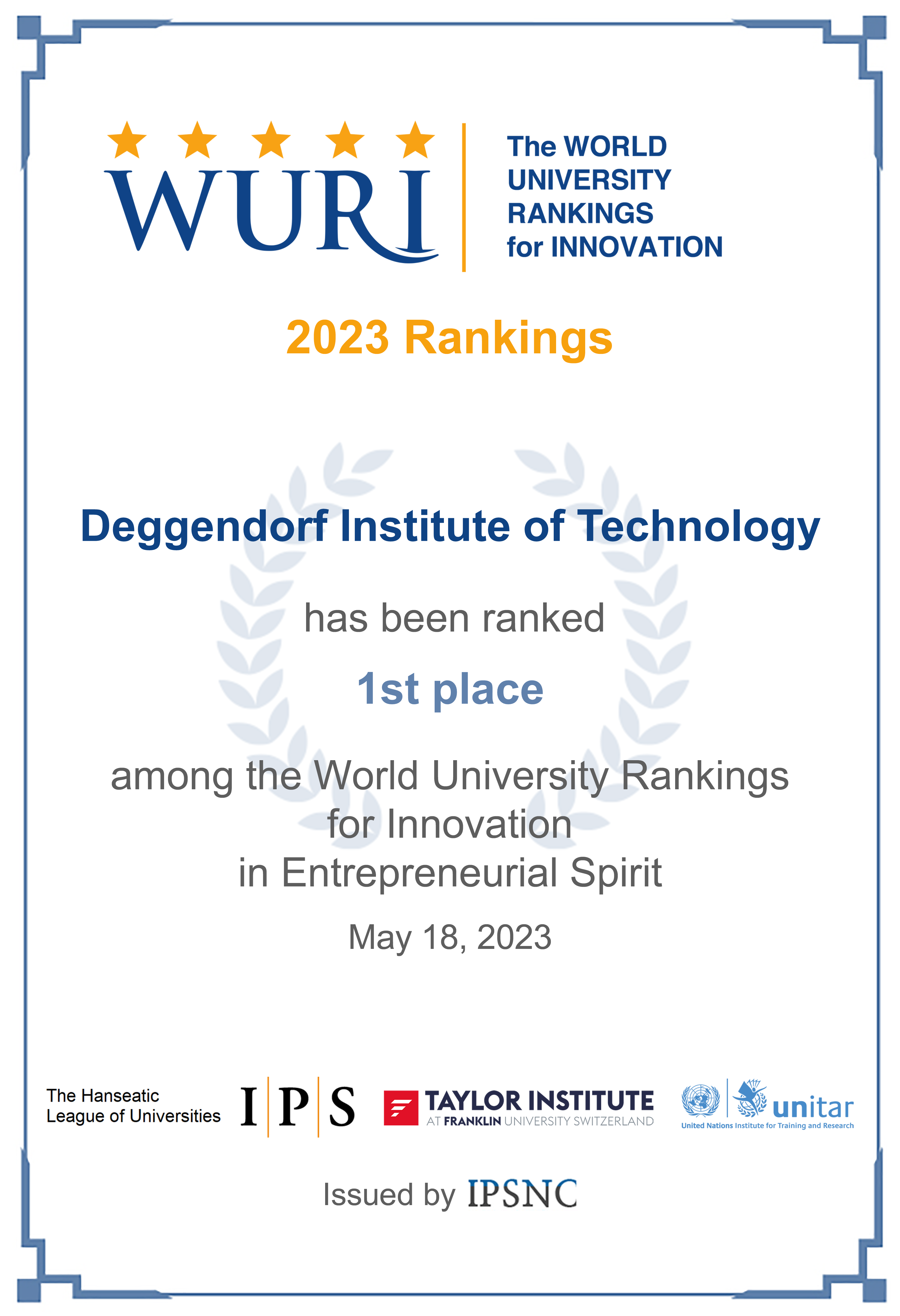
rankings


 Alle Bewertungen lesen