Where ideas grow and businesses scale.
We drive ideas, innovations and companies forward


Level up: Ready to take your business model to the next level, realign it and finally get started? Then you've come to the right place. Our premium programmes support advanced start-ups and established companies in breaking down barriers, seizing new opportunities and achieving sustainable, profitable growth.
If you want to refine, transform or scale your business model, you'll find the right programmes and inspiration here.
You want to accelerate your growth? Then get in touch with us – we take your business model where it belongs: forward.
Programmes
News
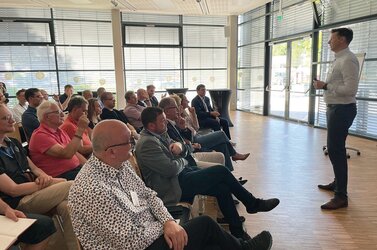
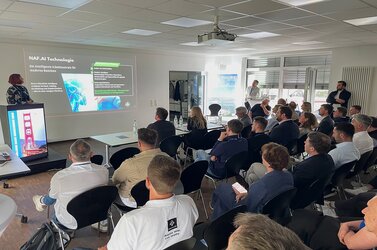
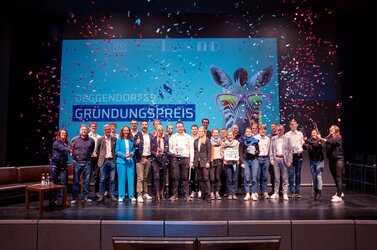
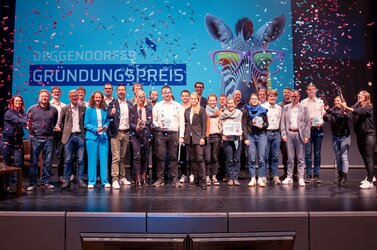
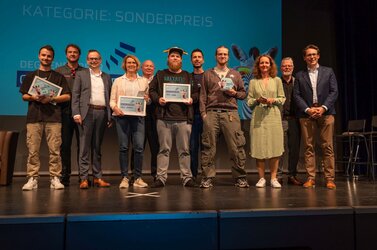
When Lower Bavaria’s innovative spirit meets Silicon Valley’s radical growth mindset, it creates value that can transform the region for the long term. After an intensive ten-month project phase and a trip to California, the renowned “Silicon Valley Program” of the Deggendorf Institute of Technology (DIT) celebrated its big homecoming event on May 7 on Campus Oberschneiding. Nine startup teams presented to investors, industry experts, entrepreneurs and researchers, explaining how they had achieved market readiness over the past few months.
From the AI Revolution to the Smart Food Concept
Among the graduates are pioneers such as Markus Klett, who has developed a “digital brain” for artificial intelligence with his startup Cyrock. His technology makes it possible to process massive amounts of data with more than a thousand terabytes in real time – an innovation that has already attracted the interest of global players such as Dell Technologies and is on the verge of securing an initial round of funding worth 3 million euros.
The program also places an emphasis on mobility. The participant Tomislav Lang is leveraging the program’s network through his FLYVINI platform to improve connectivity in the Straubing region in collaboration with his partner, Straubing-Wallmühle Airport. For him, engaging with innovative entrepreneurs was crucial for addressing critical questions and refining his own business model. His success proves him right: The initial doubts of potential customers are already turning into actual bookings and rising passenger numbers.
Odette Lamkhizni demonstrated with NEW AGE OF FOOD that innovation is also possible in the food sector. She developed AI-powered food vending machines that offer high-quality, sustainably heated meals around the clock. For her, the program was a turning point: “We had to completely rethink everything and go back ten steps to rebuild the foundations much more solidly.” Today, her company has a global outlook.
Safeguarding Bavaria’s Guiding Principles
Behind the DIT’s Silicon Valley Program, which has been based in Oberschneiding for around 10 years, lies a key economic policy conviction. The program’s initiator, Prof. Peter Schmieder, describes it as almost “scandalous” when market-changing innovations are invented in Bavaria but only achieve economic success elsewhere thanks to foreign capital. The aim of “To the Valley and Back” is therefore to make the teams investment-ready and operational, whilst keeping the value creation here in the region.
A Program for the Future
The homecoming event highlighted the importance of this network. Before a high-profile panel – including representatives from Fraunhofer Venture, the Head of Entrepreneurship at the University of St. Gallen, and partners from Sequel Europe – nine teams demonstrated their “investment readiness”. Following the presentations, concrete discussions with investors took place during the subsequent networking session. In particular, the presence of numerous alumni, some of whom had already taken part in the program six years ago, demonstrates the deep sense of connection within the ecosystem that has been created.
“I am incredibly proud of the teams, because I know where they started and how far they’ve come,” says a visibly pleased Peter Schmieder. Armed with a completely fresh perspective on topics such as scaling, sales and entrepreneurial thinking, the founders are returning ready to turn their innovations into real social value.
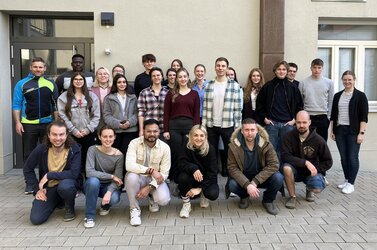
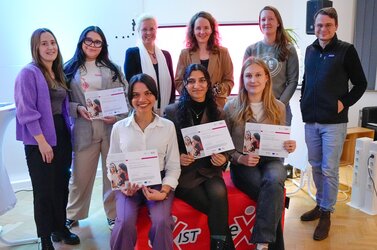
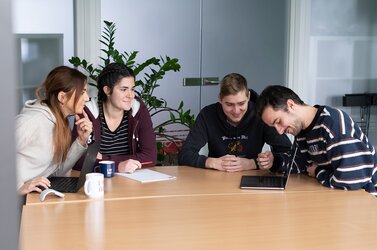
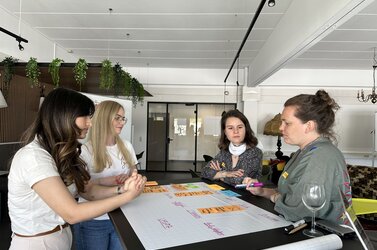
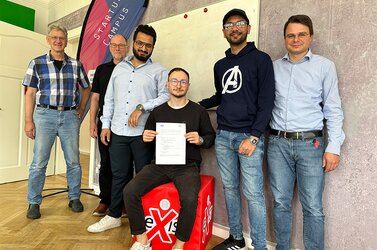
At the beginning of June, the international founding team "future-link" from the Startup Campus of the Deggendorf Institute of Technology (DIT) received an EXIST startup grant of €131,500 for their idea of a retrofit solution for easy machine data collection.
The young founders—Shivam Parmar (India), Ali Aljalali (Syria), and Johannes Bardon (Germany) got to know each other at DIT and have set themselves the goal of offering companies a manufacturer-independent plug-and-play retrofit solution for recording machine data. This should then be able to be used for fully automated process monitoring of machinery. Since older machines often lack the necessary interfaces for data extraction, future-link is developing a product using DIT's patented "Method and System for Machine Data Collection" (DE102019101132). This product enables uncomplicated machine data collection (MDE) without external sensors or existing interfaces. Additionally, the startup offers operational data collection (BDE), which, when combined with MDE, provides a comprehensive overview of the production process. To ensure information security, the data traffic of the system, which runs on Raspberry Pi and Windows, can operate within a completely independent network, separate from the manufacturing operation.
Having moved into the Startup Lab in Veilchengasse, Deggendorf, the three founders now have twelve months to turn their prototype into a market-ready product. Concurrently, they are also working on expanding their business model.
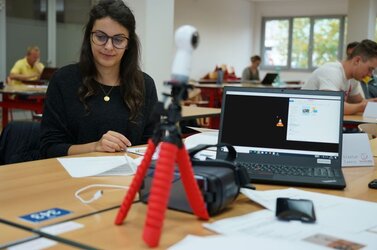
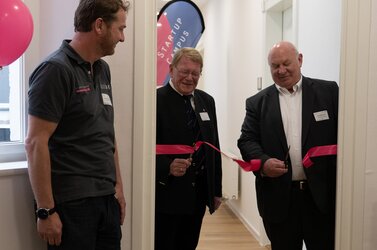
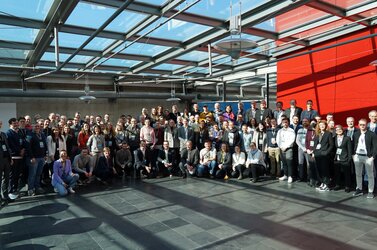
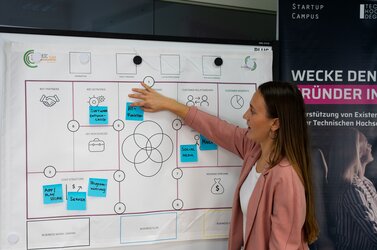
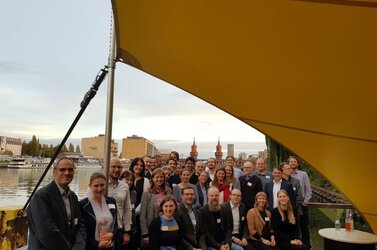
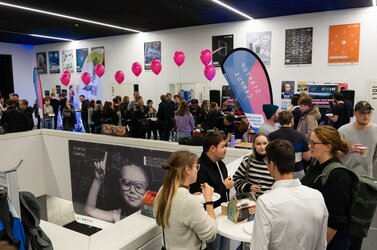
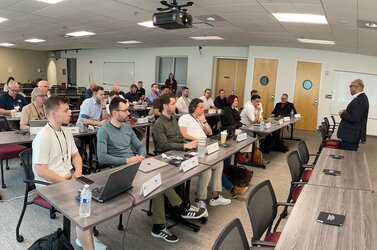
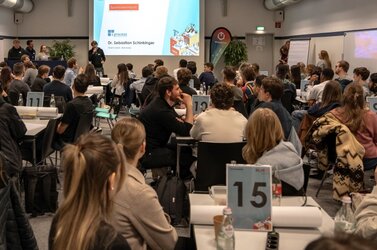
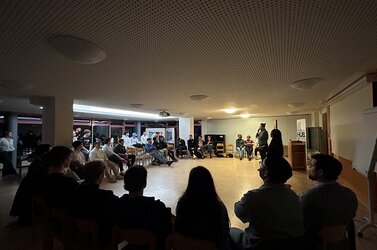
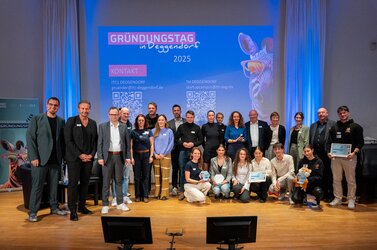
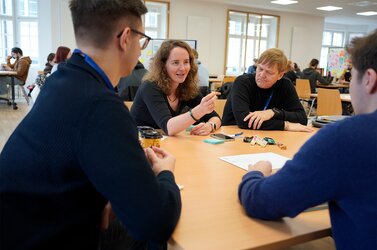
The evening lecture hall was packed with well over 100 participants from start-ups, students, political representatives and regional companies, delicious cappucino beforehand and pizza for everyone at the end. In between, a firework of great ideas from young founders. The 7th Start-up Day of the Startup Campus of the Deggendorf Institute of Technology (DIT), ITC1 Deggendorf and the Hans Lindner Foundation, which took place on 16 November on the DIT campus, was as successful as one could wish for. An evening you won't forget in a while.
Framed by a keynote speech by the well-known Munich start-up "happybrush" and a small panel discussion with the local heroes from "TI4F", a total of six start-ups pitched and battled each other for the favour of the curious audience. All business ideas had to be explained in a maximum of three minutes. Not so easy, given the sometimes complex and offbeat topics. The many questions from the audience reflected not only the great interest, but also the powerful impression all the pitches had made.
The team "wherehouse" presented a mobile phone app that even small companies can use to get a quick overview of their stock of C-parts, i.e. small things like screws or dowels, with just a few clicks. "Plant my Trip" then showed how artificial intelligence (AI) can be used to optimise the routes to and from the workplace as well as reduce costs for the workforce and cut CO2 emissions. Things were a bit bigger at "SHT", which is already very successfully working on a harvesting machine for commercial hemp. This project also showed what options the rural area offers and what would be difficult to develop in an urban environment. "Career Captain", the eventual winners of this challenge at the Start-up Day, explained their digital replica of workplaces so that interested people can get an exact image of what to expect in their future job while they are still applying. The sorting of Lego parts is taken care of by "reBricker". And who doesn't know the vast quantities of individual Lego parts from numerous construction kits lying around in the cellar or attic. The AI-based sorting machine from "reBricker" recognises each individual part and sorts them back into their original sets at the end. And of course, the topic of gaming was not to be missed. Here, "5 Finger Games" was at the start, which is developing a blockchain-based tactics game called "Knights of Cathena".
In addition to great company ideas, the Start-up Day also showed the strength of the associated network in and around Deggendorf. In addition to the DIT Startup Campus, there is also the Gründerzentrum Digitalisierung Niederbayern (GZDN) in ITC1 Deggendorf and the Hans Lindner Foundation. Together with the university's start-up activities, some of which are already anchored in the degree programmes, they form an ideal environment for young people who want to turn their dream of owning their own company into reality. Here you can try things out and try yourself out in a protected space. Motto: Just do it!
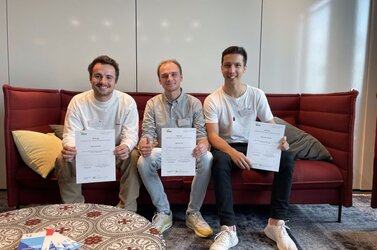
The startup "Career Captain" from Deggendorf has won a five-figure scholarship in a Bavarian-French competition in the field of artificial intelligence - up to 95,000 euros are earmarked for each of the eight best competitors. Now the founding team, which is supervised at the Deggendorf Institute of Technology (DIT), can pursue its start-up idea in the coming year. The Career Captain platform is intended to support young people in choosing a career by means of artificial intelligence (AI).
Above all, pupils should be able to find out their professional interests and get to know suitable companies via Career Captain. To do this, they have to take an orientation test that suggests suitable job profiles with the help of artificial intelligence. It is important to the founders that the platform is playful and appropriate for the target group.
The AI Cup, in which Maximilian Hau, Sebastian Hau and Maximilian Anzinger participated with Career Captain, is a Bavarian-French start-up initiative to support the next generation of AI entrepreneurs and bring forth innovative AI start-ups in Europe. This year, the University of Passau hosted the AI Cup. In the group of entrepreneurial competitors, the three founders took third place. The team started working on the platform two years ago. With the DIT Startup Campus as an advisory centre, they received an EXIST start-up grant, which expired in September. The funding from the AI Cup is important follow-on funding for the team.
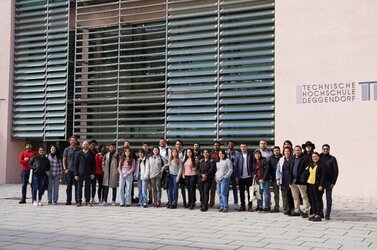
Fifteen students from the Universidad de Concepión Chile (UDEC) visited the Deggendorf Institute of Technology (DIT) for a week at the end of September. Together with DIT students from the field of energy management, they took part in the GROW4Energy Startup Summer School. The focus was on developing joint ideas and exchanging knowledge in topics such as solar, wind and hydro energy, energy from biomass and e-mobility. In addition, a long term cooperation between the UDEC and DIT was to be established and the entrepreneurial spirit in the respective regions strengthened.
In the GROW4Energy Startup Summer School, the students listened to lectures on topics in the fields of entrepreneurship, energy economics and intercultural communication and participated in workshops focusing on the development of startups and ideas. There were also panel discussions, a pitch event and excursions to regional energy companies. The GROW4Energy Startup Summer School was organised and conducted by Prof. Dr. Javier Valdes, expert in BigGeoData, and Prof. Dr. Thomas Geiß, head of the DIT Startup Campus.
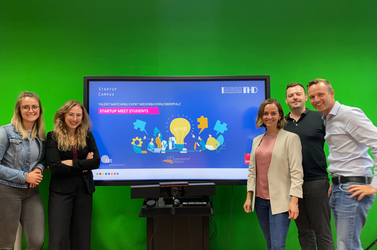
Even though it is probably assumed otherwise, it is often difficult for university start-ups to find fellow entrepreneurs to build up their business. Start-up advisors from the universities and colleges from the Deggendorf Institute of Technology, Passau, Landshut, Regensburg and Amberg-Weiden have noticed this and want to find a solution together. They see a solution in cross-university talent matching events. The first online event took place on 7 July under the motto “Startups meet students”.
The cooperation between the universities increases the chance for the start-ups to find the right team member. They can present themselves to a larger audience and meet students from even more disciplines. A total of eight selected start-up teams presented their start-up projects at the first Talent Matching Event in 3-minute pitches and then went into detail about their vacant positions. They were looking for co-founders, permanent team members, final-year students, working students or interns. Around 85 students took part in the event. After the pitches, they were able to get to know the prospective founders in small groups and in a personal atmosphere.
This time, the talent matching event was organised by the DIT Startup Campus together with the Landshut University of Applied Scienced, the University of Passau and the O/HUBs (University of Regensburg, OTH Regensburg and OTH Amberg-Weiden). All participants can imagine holding further events at each university in turn.
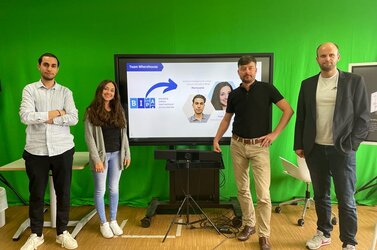
Since 2020, the Deggendorf Institute of Technology (DIT) has been a partner of the Bavaria Israel Partnership Accelerator (BIPA). The programme brings together students from Bavaria, Israel, the United Arab Emirates and companies from Bavaria. The companies assign tasks to the students, who are supposed to work out innovative solutions as an international team. Last year, students Franziska Feldbauer and Marouane Khoukh from DIT took part. Using their example, the university wants to motivate other companies and students to take part in the programme. Only a few months later, Franziska and Marouane are now working on their own start-up.
They laid the foundation for it at the company PS Cooperation, which also participated in BIPA. They gave the students the task of thinking through the topic of warehouse management and Kanban in terms of digital possibilities. Franziska and Marouane had the right profile for this - as did Neama Al-Ali from the United Arab Emirates and Tom Tsukermann and Yuval Peretz from Israel. Through the organisers of BIPA, they were selected as a team for the PS Cooperation. Josef Gutsmiedl, who works at the PS Cooperation location in Eggenfelden, was on hand to mentor the team. For him, the exchange between university and company was exciting: "The students brought "innovative spirit" with them and came up with completely new approaches." He was impressed by the excellent result that the students produced in only two months and that corresponded exactly to the company's ideas. The fact that Gutsmiedl is still in contact with Franziska and Marouane after the BIPA programme is all the more gratifying. Franziska and Marouane would like to further develop their start-up idea "WhereHouse" together with him and their mentor Prof. Dr. Wolfgang Dorner. WhereHouse is an AI-based solution for providing a digital twin for warehouses. Students and companies can participate in BIPA again this year. Companies can e-mail startupcampus@th-deg.de. Students apply online at: https://bip-accelerator.com/. The 2022 programme starts on 17 October with a workshop in Munich and ends on 14 December with a workshop and presentation of the results in Be'er Sheva.
BIPA is organised by the Deggendorf Institute of Technology, the Strascheg Center for Entrepreneurship in Munich, the OTH Regensburg, Tech7 and the Khalifa University in Abu Dhabi.
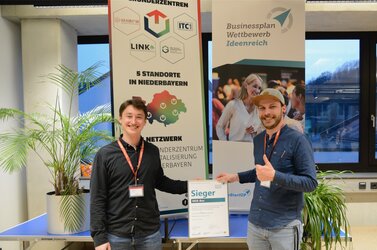

Mohammad Abu Rezeq is the first prospective founder at the Deggendorf Institute of Technology (DIT) to receive funding for his start-up idea as an international student. He wants to use a drone and artificial intelligence to facilitate the inspection of solar parks. To build the first prototype of the drone, he has now received the highest possible funding amount of € 7,500 from the Kickstart Incubator Programme.
Mohammad is studying for a Master’s degree in Electrical Engineering in Deggendorf and is originally from Jordan. With his start-up idea Squadron, he wants to help solar park operators collect data on their solar cells, which he evaluates for quality assurance with the help of artificial intelligence. Thus, compared to conventional inspection methods, it is possible to detect all kinds of anomalies in the shortest possible time and with more precise results. In July 2021, Mohammad presented his innovation to the Startup Campus team at DIT. Since then, he has been supervised and supported by the start-up advisors and his mentor Prof. Dr. Wolfgang Dorner. The start-up advisors are pleased that he Jordanian is consciously striving to found his company in Germany. This means that the added value can be felt directly. As the first international student to found a company at DIT, Mohammad would also like to take the next step and secure funding through the EXIST start-up scholarship and is currently writing an application for this.
About the Incubator Programme
The Kickstart Incubator is a programme for all prospective founder with innovative technology-oriented start-up projects or services with high customer value. After successfully presenting the idea, the first step is to develop the business model and build the founding team. Selected experts from DIT and the Startup Campus team are on hand to coach and mento the prospective founders. Free access to the StartupLab premises creates a creative working environment and enables exchange with other funding teams. With up to € 7,500 in funding per team, nothing stands in the way of building the first prototype. After completing the incubator programme, the teams are well equipped for the upcoming start-up and ready for subsequent funding such as the EXIST start-up scholarship. More information on the topic of founding can be found here: www.th-deg.de/starting-a-business
The funding is made possible by the funding measure “Entrepreneurial Thinking and Scientific Founding Spirit – Research and Founding Freedom at Universities of Applied Sciences” StartupLab@FH of the Federal Ministry of Education and Research.


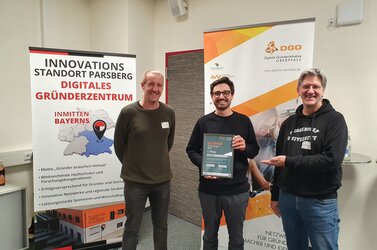
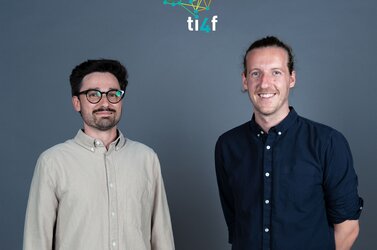
The Deggendorf Institute of Technology (DIT) supervises and supports students in various phases of the start-up process. Also when it comes to making the emerging start-ups better known and building up their network. On 27 October, the DIT Startup Campus invites you to the virtual event “meet the team”. The founding teams will each talk about their business idea for 15 minutes and then want to engage in an exchange with the audience.
Among others, the team ti4f will introduce itself. Ti4f was funded by a start-up scholarship at the Deggendorf Institute of Technology and has already founded a company. The three-member team is still looking for a strategic partner or investor, for example. Thomas Brunner, Constantin Vogel and Hamidreza Abolpourmoshizi are developing an end-to-end digitalised process chain in one-off production. The event starts on 27 October at 4 pm and takes place via Zoom. Not only students, employees and partner companies of the university can participate, but also anyone who is interested in the topic of business start-ups. Registration is possible via DIT’s seminar platform: www-th-deg.de/seminare. The zoom link will be sent out afterwards.
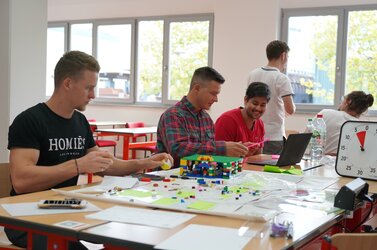
If you like the idea of owning your own company but don't quite know what the business idea could be yet, you don't have to give up on this dream right away. The Startup Campus of the Deggendorf Institute of Technology (DIT) showed how students can take the first steps towards their own startup at the GROW Startup Workshop. In the 5-day seminar at the end of September, students from different disciplines developed concepts for start-up ideas with innovation potential. The Hans Lindner Foundation and primeAcademy, which are experienced in the field of entrepreneurship, were also present.
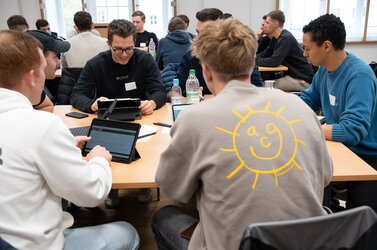
In the theory part of the start-up workshop, the students learned how to develop their own business idea and what is important in the process. For example, assessing their own competences and those of others, which creativity techniques help and how to develop further in a team. The week of the event was then used to form teams, develop concepts and, in the end, convince an invited jury. The idea of a mechanical seawater desalination plant by the FLOAT team was the most popular. All teams that took part in the Startup Workshop have the chance to apply for the exclusive "Kickstart Incubator" funding programme. The Startup Campus is on hand to advise those interested in founding a company. They can also draw on the network of start-ups at DIT. Everyone has already met at the start-up regulars' table.
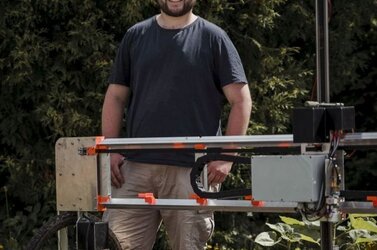
The start-up SEPP of the Deggendorf Institute of Technology (DIT) wants to conquer the market of domestic vegetable cultivation next year. SEPP farming has the vision of cultivating self-sufficient gardens with the help of a robot. It is supposed to help with watering and weeding so that the dream of having one's own vegetable garden is no longer a question of time. The team still needs reinforcement in product development (focus on software). In particular, we are looking for a co-founder with project experience. The idea of the vegetable robot will be funded by the FLÜGGE programme starting this autumn, so that the team can grow. Anyone who would like to contact the start-up can do so by e-mailing Andreas Stockinger at andreas.stockinger@th-deg.de.
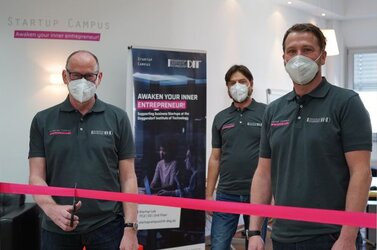
With over 300 square metres of new space in the ITC2 in Deggendorf, the Startup Campus of the Deggendorf Institute of Technology (DIT) is creating room for innovative minds who want to start their own business. An official inauguration of the Startup Lab took place digitally on 28 April. Here, all network partners of the Startup Campus as well as DIT employees had the opportunity to virtually visit the premises.
Among the invited guests was Minister of Science Bernd Sibler. He emphasised in the video conference: “With the Startup Campus, the Deggendorf Institute of Technology is further expanding its excellent environment for the start-ups of its graduates. As a central contact point closely networked with the region, it will bring young, creative and imaginative people together with attractive partners. Their founding spirit and courage are needed for our progress. The Startup Campus at DIT will also promote both and thus pave the way for promising technologies of tomorrow. On the part of the Free State, we are providing the optimal framework with the innovation offensive Hightech Agenda Bayern.”
Together with the Startup Lab, the Startup Campus is a central contact point for all those interested in starting a business at the university. Through the rented space, the Startup Campus provides founders with a creative working environment. Teams that are currently being mentored and supported are allowed to use the office space, the co-working space and the seminar room. The Startup Lab is open for everyone to visit and exchange ideas.
The event also served as the first networking meeting with all companies, institutions and politicians involved in strengthening the start-up culture regionally. Special attention was paid to the network partners learning more about the Startup Campus and their current projects. Of course, the start-up teams are also part of this. A few young founders had the chance to present their start-up ideas to the audience. After all, the innovative teams in particular are the ones that really bring the Startup Lab to life.
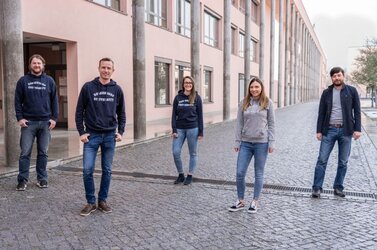
The Deggendorf Institute of Technology (DIT) is once again receiving funding to intensify its start-up work. As part of the funding priority "regional networking", a sustainable, regionally anchored start-up culture is to be established through networking in the rural region in the area of Eastern Bavaria. Austria and the Czech Republic are also a focus of the project. Almost one million euros are available to the DIT Start-Up Campus team from the Federal Ministry for Economic Affairs and Energy.
The university wants to create more start-ups and thus more jobs for the region. The DIT Start-Up Campus team is not the only one advising the founders. Professors and academic staff at the university make themselves available as mentors and DIT alumni from the field are arranged as contacts for exchanging experiences. Companies, politicians, business associations, start-ups and government institutions in the rural region are also asked to participate in the regional network. A major challenge at present is to hold all events virtually. Nevertheless, the best possible effort is being made, because regular network meetings, the transfer of know-how and the exchange of ideas among the founders are enormously important. For example, the monthly information events on the topic of start-up financing or the start-up regulars' table take place via Zoom. There is a range of digital seminars especially for women, such as Female Empowerment. A female founder, who herself studied at DIT, also reports on her self-employment in the virtual alumni founder talk. Those interested in founding a company with an exciting idea are invited to contact the DIT Start-Up Campus. Particular attention is paid to innovative or high-tech start-ups. The Start-Up Campus team advises not only students, but also alumni and staff of the university.
Since 2002, the university has gradually built up its profile as a start-up university. Over the years, numerous successful start-ups, activities and qualification offers have resulted, so that in 2017 the Start-Up Campus team was finally formed from DIT's Institute for Start-ups as a central point of contact. The university can further strengthen its activities through the funding measure "regional networking - establishing a sustainable, regionally anchored start-up culture" Exist V Potentiale of the Federal Ministry for Economic Affairs and Energy.
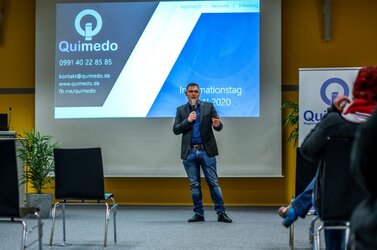
The Deggendorf-based start-up Quimedo has taken second place in this year's Ideenreich business plan competition. The competition, sponsored by Bayern Kapital, is organised by BayStartUP and takes place in cooperation with the Gründerzentrum Digitalisierung Niederbayern (GZDN). Innovative founders from south-eastern Bavaria who are in the process of setting up a company are supported. In this context, Dr. Timo Steininger, founder of Quimedo, also applied and convinced the jury.
The idea of the start-up was born in 2019, namely to digitalise and simplify the transition of patients from inpatient treatment to rehabilitation/nursing or from home to care with the app Quimedo. Via the app, healthcare facilities enter free capacities as well as possible forms of treatment. Within a very short time, patients can be referred directly to the right place for optimal treatment. The digital networking is an enormous relief for the nursing staff. The start-up was founded in October 2020, with Prof. Dr. Thomas Geiß and Prof. Dr. Christian Rester from the Faculty of Applied Health Sciences supporting the team throughout the entire start-up process. Quimedo is based in Deggendorf with founder Dr. Timo Steininger, co-managing director Stefan Klein and four employees. They use the coworking space of the start-up centre at ITC1, where Thomas Keller (managing director of ITC1) is a strong partner. An important factor of the app is user-friendliness. Therefore, the platform should also be put through its paces. Students of the Health Informatics degree programme agreed to check the usability of the Quimedo app during the test phase. In January 2021, the time had come - the app could go live. Since then, it has been confirmed that the platform works very well. A large number of successful patient referrals have already been made. The Deggendorf Institute of Technology (DIT) is a valuable partner for Quimedo. DIT has been heavily involved in building up the network in the eastern Bavarian region. In the meantime, many joint projects are underway, such as AI in care. Founder Dr Timo Steininger himself will be head of the practical nursing department at the Faculty of Applied Health Sciences from 1 April 2021. One of Steininger's goals is to dovetail science and Quimedo in the long term.
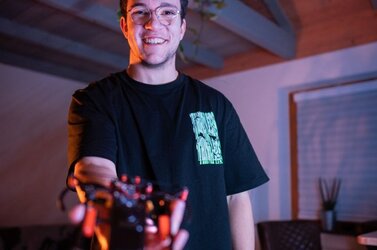
Daniel Fuchs is the founder of the start-up threesixty-drones. His business idea is based on a specially designed drone for 360-degree video recording. Less than a year after presenting his innovation at the Deggendorf Institute of Technology (DIT), the 21-year-old is an independent entrepreneur and offers the creation of promotional videos using drones as a service. The "Kickstart Incubator" funding programme, which is still fairly new at the university, helped him along the way.
Innovative technology-oriented start-up projects or services with high customer value can apply for the Kickstart Incubator programme. For Daniel Fuchs, this was one of the most decisive factors, as it enabled him to finance the construction of the first prototype of the drone and part of his equipment. Particularly important for him was a free patent consultation, which he was able to take advantage of through the Kickstart Incubator programme. That's because the drone can capture 360-degree video footage without being visible in the video itself. Such footage was previously impossible with other 360-degree drones due to their size and inertia, making the project unique. Flying the drone creates realistic virtual tours of buildings. It can also easily fly over sensitive locations near people. Thus, for example, it is possible to fly past athletes at indoor sporting events up close and with maximum maneuverability as well as speed, or to fly between the dancers' feet at dance events.
During the 6-month funding phase, Daniel Fuchs was able to continuously draw on selected experts from DIT and the Start-Up Campus Team and exchange ideas with other founding teams. He also survived a drone crash or two. And even found a company partner. Together, they are now working on their first orders. You can contact Daniel Fuchs via his Instagram channel or via e-mail: mail@threesixty-drones.com
About the incubator programme
The Kickstart Incubator is a newly created programme for all founders of tomorrow. Innovative technology-oriented start-up projects or services with high customer value can apply for the programme. After successfully presenting the idea, the first step is to develop the business model and build the founding team. Selected experts from DIT and the Start-Up Campus team act as coaches and mentors for the young founders. Free access to the premises of the StartupLab creates a creative working environment and enables the exchange with other founding teams. With up to € 7,500 in funding per team, nothing stands in the way of building the first prototype. After completion of the incubator programme, the teams are ideally equipped for the upcoming start-up and ready for subsequent funding such as the EXIST founder scholarship. More information about founding can be found here: https://www.th-deg.de/startupcampus-en

New start-ups from the ranks of the Deggendorf Institute of Technology (DIT) are not long in coming: the university is currently supporting the start-up “Vourus”. A company that wants to gain a foothold in the field of IT security. In particular, companies that process sensitive data can benefit from the start-up’s services.
The founders behind Vourus are Nicolai Roider and Sebastian Schreiner. Already as teenagers, they worked together on various projects in the technical field. Very quickly, they recognised the increasing relevance of data security and decided to set up a company together. Nicolai Roider studied business administration in the commercial area and Sebastian Schreiner is an IT specialist for application development in the technical area. At DIT they have the chance to put their plan into practice with a start-up scholarship. They are supported by the DIT Start-Up Campus, the Hans Lindner Foundation and Prof Dr Thomas Geiß as mentor.
The idea of the Vourus founders is to make the exchange and transfer of data more secure. To this end, they have developed an encryption system that is intended to offer the highest possible security. It ensures that only authorised people can access sensitive data. It immediately recognises whether files are in their original state or have been changed after being sent. Another advantage over conventional systems is that users can be deprived of decryption rights afterwards. The young founders have already concluded the first partner contracts with software manufacturers. The start-up is therefore planning to expand its resources, especially by adding staff in the areas of development and sales.
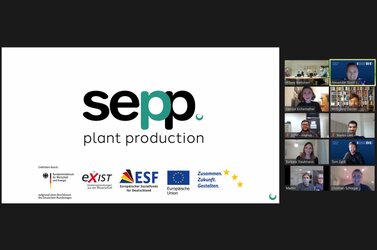
Since August 2020, four students at the Deggendorf Institute of Technology (DIT) have been pursuing the vision of developing a vegetable robot for hobby gardeners with their start-up SEPP. SEPP is funded by an EXIST start-up grant from the German government and supervised by the DIT Startup Campus team. The first milestone was the interim presentation to the SEPP start-up network on 15 December 2020. The team presented the results of the business plan preparation as well as the current development status of the prospective start-up.
The team around Andreas Stockinger - Martin Seidl, Martin Leitl and Sandra Eichenseher- was able to realise a first prototype in the last few months thanks to the funding provided. The start-up’s vision is a vegetable robot for Smart Efficient Plant Production (SEPP). The aim is to make it easier for hobby gardeners to grow vegetables in their home gardens by automating the vegetable patch. Thus, even those who previously had little time for gardening can enjoy the benefits of self-sufficiency in vegetables. They were supported in this by their mentor Prof Dr Wolfgang Dorner and the Startup Campus of DIT. By the upcoming gardening season in 2021, the team would like to be able to build a functioning robot. Automated watering and weeding should then be possible outdoors for the first time. The young founders plan to enter the market in spring 2022.
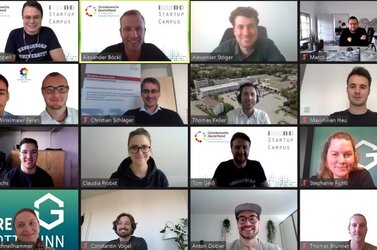
The Deggendorf Institute of Technology (DIT) has been working for several years to ensure that great business ideas from students do not simply disappear into a drawer. Students who would like to set up their own business can rely on the university’s Startup Campus team and a network that has grown considerably in the meantime. The university’s central information event is the Start-up Day. This year, it took place on 18 November as a virtual event.
In several lectures more than 180 participants got to know the contact people of the university, the Hans Lindner Foundation, the Digitalisation Start-up Centre Lower Bavaria and the Digital Start-up Centre Rottal-Inn Freyung Grafenau. All of them offer their support and competence on the way to independence. Time for exchange and networking among students was also planned for the Founders’ Day. Five start-ups presented their ideas and some of them were still looking for fellow entrepreneurs. At the end of the event there was still knowledge about brand management and the opportunity to ask questions in small groups.
Students who would like advice or would like to contact other start-ups can always contact the Startup Campus team. Prof Dr Thomas Geiß, Alfons Weinzierls and Alexander Böckl are available for initial contact via e-mail at startupcampus@th-deg.de.
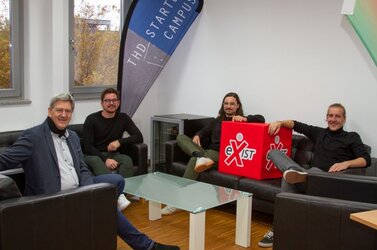
A new founding idea is currently gaining momentum at the Deggendorf Institute of Technology (DIT). It is about digitalisation in tool and mould making. The companies in this sector are usually very well equipped in terms of technology. However, full utilisation of their resources is not always possible. Three students at DIT now hope that their idea will optimise the process chain from incoming orders to quality management in such a way that capacities are fully utilised and costs and time can be saved at the same time.
Tool and mould making is essential for any series production. However, the production of tools and moulds, i.e. unique specimens, can still be optimised. The start-up “ti4f” has developed a strategy in cooperation with the Application Laboratory Industry 4.0 of DIT in order to digitalise the process in tool and mould making throughout. Especially the processes of the highly complex one-off production can then be analysed and shortages can be detected. With the help of a self-learning knowledge database working in the background, strategies for process optimisation can be generated. Constantin Vogel, Thomas Brunner and Radoslaw Korek are the founders of the “ti4f” start-up. Their product is designed to such an extent that they can integrate it step by step into the consulting process. They are already in contact with the first test customers. This step serves to evaluate their know-how and enables them to gain new experiences. The next steps planned are the development of the “ti4f” brand, the founding of the company and the search for further beta customers.
Constantin, Thomas and Radoslaw came up with the founding idea while studying for a Master’s degree in Technology Management. In the lectures and practical courses in the Industry 4.0 application laboratory, they had debated a lot about the future of industry. They also discussed the problems of single-part production under the direction of Prof Dr Gansauge. “ti4f” is supported by the DIT Startup Campus and an EXIST start-up grant from the Federal Ministry of Economics and Energy. The major goal is to have an MVP for all digital applications by the end of the scholarship period in September 2021.

With its new incubator programme "Kickstart", the Startup Campus of the Deggendorf Institute of Technology (DIT) promotes unique projects and further expands the start-up culture at DIT.
The new programme "Kickstart" refers to the pre-founding phase and prepares students, employees and alumni of DIT and EXIST start-up grant in six months. Thanks to the programme funded by the Federal Ministry of Education and Research, the "Kickstart" projects can count on support of up to € 7,500 for the construction of a prototype. In addition, participants will be given access to the creative working environment in the new DIT Startup Lab and coaching by the experts of the Startup Campus Team.
With the first "Kickstart" project "fx-drones" by Daniel Fuchs, a 360° video drone is promoted, which is especially designed for indoor recordings. At less than 250g, the drone is so light and manoeuvrable that it is able to fly through small openings, windows or shelves and also over sensitive places near people without any problems. For example, it can fly past the athletes at sporting events and even between the feet of the dancers at dance events. With this concept, Daniel Fuchs is one of the first people in Germany to receive funding from the programme.
With the "scob" team, a second project has already been included in the "Kickstart" incubator programme. This is a career platform based on Artificial Intelligence, which helps companies and potential trainees to find each other and achieve the "perfect match" on the job market, so to speak.
The newly created incubator programme "Kickstart" is aimed at all founders of tomorrow and once again underlines the pioneering role of the DIT Startup Campus in the start-up scene. Further information on the programme can be found at: https://th-deg.de/en/students/career/startup-campus.
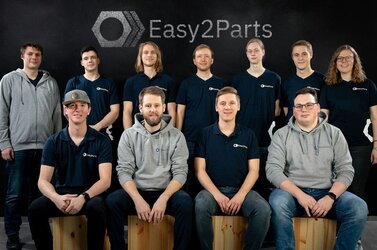
The start-up “Easy2Parts” from the ranks of the Deggendorf Institute of Technology (DIT) is on course for success. After 18 months as a young entrepreneur, the founding team convinced the BayStartUp investor network. Several investors are providing funding because they believe in the idea of “Easy2Parts”. The team of the university’s start-up campus has supported the start-up from the very beginning and is eagerly following the next steps.
A supply chain platform that intelligently links buyers and suppliers and automates parts procurement in industrial production. That is the idea behind “Easy2Parts”. The founders Robert Hilmer, Sebastian Freund and Michael Neuhauser came together through the university. Robert Hilmer studied business management while working part-time, while Sebastian Freund first studied industrial engineering and then went on to study general management in an MBA programme. Michael Neuhauser is a graduate of the Applied Computer Science programme. The team of the DIT Start-Up Campus, especially Prof Dr Thomas Geiss, offered a contact point and personal support. Together they developed the business model for “Easy2Parts” and prepared an idea paper for the application for their first financing package, the EXIST start-up grant. With the start-up grant, a steep upward trend began in March 2019. Five other employees are now part of the “Easy2Parts” team, they have found their office space in the ITC1 start-up centre in Deggendorf and they have successfully completed the Business Plan Competition “Ideenreich 2020”. Seed financing, i.e. start-up capital from companies that see the future potential of Easy2Parts, will enable Robert, Sebastian and Michael to get off to a completely different start. They can also count on the support from DIT. The founding team was and is supported by two professors of DIT as mentors: Prof Dr-Ing Ludwig Gansauge, who has been researching the networking of manufacturing companies for more than 20 years and also has extensive knowledge and networks in mechanical engineering. And Prof Dr Herbert Fischer, who supports the founding team with regard to software development, ERP systems and data protection, among other things.
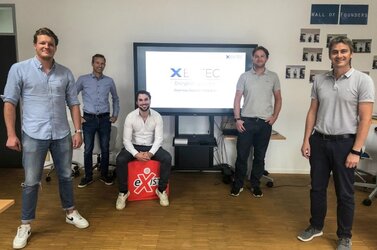
Software for IT security may soon come from Deggendorf. The Deggendorf Institute of Technology (DIT) is currently supervising the start-up company XENTEC. Financed by a scholarship, the two-member founding team wants to build up an IT security company. Initial product tests with pilot customers are already underway.
Nicolai Roider and Sebastian Schreiner want to create maximum IT security in all areas of the software industry and their own company. Their first product is to be a software with which other software manufacturers can protect their product. The mission is to set a new standard in data encryption and data protection.
They are supported by the DIT Start-up Campus, the Hans Lindner Foundation and by an EXIST start-up grant from the Federal Ministry of Economics and Energy. The two founders have already achieved quite a bit in their first half year as scholarship holders. The first Xentec product is patent pending. Initial tests have shown a positive response from pilot customers. Their feedback is currently flowing into the further development of the software. Anyone looking for Xentex on the Internet will have to be patient a little longer. The development work currently requires the full attention of the two founders.
The team of the DIT Start-up Campus is always open for innovative ideas. If you would like to become a founder, you can contact us via e-mail startupcampus@th-deg.de.
Founding team of the Startup Campus of the Deggendorf Institute of Technology (DIT) receives an EXIST founding grant of € 117,000 for the idea of the agricultural robot SEPP.
The idea is simple and ingenious: a robot that takes care of the domestic vegetable garden. The useful helper will make it easier for garden owners who do not have the time to regularly water or weed their garden. This is the vision of Andreas Stockinger and his two founding colleagues Niklas Rohne and Martin Seidl. With this idea, the team approached the DIT's Startup Campus and, with its support, received an EXIST start-up grant.
Supported by the scholarship in the amount of € 117,000, the prospective founders now have twelve months to turn the vision of the agricultural robot SEPP into a marketable product. During the development of the robot, the construction of the first prototypes up to the planning of a serial production, the founding team can count on the support of DIT and its Startup Campus, no matter if it is the solution of technical problems or the production of single metal components. If everything goes according to plan, home gardeners can hope for a significant reduction in workload because of SEPP for the 2022 gardening season.
The founders will be supported by their mentor Prof Dr Wolfgang Dorner and the DIT Startup Campus. The team of founders will move into the Startup Lab of the Startup Campus as their workplace during the funding period. The DIT's Startup Campus supports students, employees and alumni of the university in all phases of a business start-up.
The EXIST founding scholarship is funded by the Federal Ministry of Economics and Energy and the European Social Fund. In addition to students, the scholarship also supports graduates and scientists who want to implement their founding idea with a business plan.

Nothing we wear on our bodies is more contaminated with viruses and bacteria than our mobile phones. "CuCase", a start-up from the Deggendorf Institute of Technology (DIT) launched a smartphone case that addresses this very problem. The special thing about it is that the copper alloy used is also effective against the SARS-CoV-2 corona virus.
Antibacterial mobile phone sleeves are already available. No surprise! We touch our smartphones up to 2,500 times per day, on wich an average of 100 different types of bacteria are found - not counting viruses. A market with growth potential. "Our phone case consists of a special copper alloy," explains Dennis Gerdts, inventor of the product and responsible for research and development at CuCase. "Copper," says the 24-year-old, "is one of the most effective materials in the fight against pathogenic germs. It eliminates more than 99% of bacteria." And it eliminates other microbes like the corona virus. Previous products do not have this important feature. Besides, their antibacterial effect diminishes over time. Due to the so-called halo effect of copper, which leads to up to 70% less microbes (viruses, bacteria and germs) settling in the immediate vicinity, the touch screen is also less contaminated when using a CuCase.
The Deggendorf-based company CuCase is still the only one in the world to pursue this approach - almost. Because the competition never sleeps. "At Vanderbuilt University in the USA are three students who are as far advanced as we are," reveals Gerdts. That's why we have to hurry. On 15 July, the distribution is finally supposed to get under way. For the market entry, most Apple iPhones will be covered first. However, other models are to follow soon. You buy the cases via the website of the Deggendorf start-up (www.cucase.de) and a few weeks later also via Amazon. Compared to conventional cases, the prices are in the middle segment. There is a special offer for the market launch. Also interesting: with every purchase of a CuCase you support Ärzte ohne Grenzen (Doctors without borders) in the fight against corona.
Besides Gerdts, Anton Dobler (25) and Marco Jülke (28) are also shareholders and managing directors of CuCase. Dobler, a prospective Master's graduate at DIT in Technology Management, is the Marketing and Sales Manager and sees himself as an interface between the economic and technical areas. Jülke, a graduate in Economics, is responsible for finances, administration, production and logistics. All three can look back on numerous practical experiences in renowned industrial companies and on well-known internet platforms.
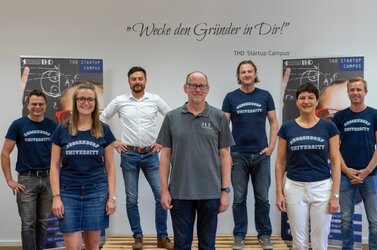
The Deggendorf Institute of Technology (DIT) is intensifying its foundation work. The thematic focus on start-up and start-up culture is to be expanded and the range of courses on offer, which up to now has mainly addressed students, is to be expanded. The team of DIT's Startup Campus has had almost € 900,000 at its disposal since April. The Federal Ministry of Education and Research supports the university's plan to promote entrepreneurial talent.
The Startup Campus team wants to create more start-ups and thus up to 1000 more high-tech jobs in the Deggendorf area in the next 10 years. Alfon Weinzierl says: "The work of the Startup Campus has so far been a cross-sectional function for many players in addition to their actual jobs and has been performed on top. With the successful project award we now also receive the necessary means and resources to take the DIT's start-up culture to the next level". According to Weinzierl, in comparison to the current situation, the Startup Campus will not only supervise the start-up and entrepreneurship teaching and student teams, but will also become a university-wide institution that is a contact point and home for founders at a central location and radiates into the rural region via the Technology Campuses. In future, the team will also be available to employees of the university. True to the motto "Wake up the founder in you!", everyone is invited to contact the Startup Campus team and develop their founding idea.
Many individual measures will now be implemented step by step. As a first necessary step, the team of DIT Startup Campus sees the development and renting of suitable premises close to the university to create a Startup Lab. Furthermore, it is planned to initiate a university incubator programme for the pre-foundation phase for university members, with which the university can then also financially support projects.
Since 2002, the university has successively built up its profile as a start-up university. Over the years, numerous successful business start-ups, activities and qualification offers have resulted, so that in 2017, the team of Startup Campus was finally formed from the Institute for Business start-ups of DIT as a central contact point. In the recently published WURI ranking, the university has attracted positive attention, particularly because of its start-up culture. The university can further strengthen its activities through the StartupLab@FH funding measure "Entrepreneurial thinking and scientific entrepreneurial spirit - freedom for research and start-ups at universities of applied sciences" of the Federal Ministry of Education and Research.
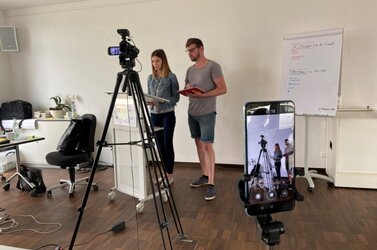
The most recent participants of the Silicon Valley Program of the Deggendorf Institute of Technology (DIT) began their exciting nine-month journey in mid-July. They want to bring a business idea to the market and learn how to do it with help from the Silicon Valley Program. The role model is the Silicon Valley start-up scene in California, where the journey will continue for a week at the end of the certificate programme.
The eight groups laid the foundation for marketing their projects during the introductory week. Each project group got to know their mentor from Santa Clara University in Silicon Valley, California, via video conference. The American elite university has been a partner in the certificate programme since the beginning. Over the next nine months, the project groups will contact their mentors once a month via video conference and present the progress of their work. Prof Peter Schmieder, founder of the programme, and Alexander Dorn will support them in this process. In addition, the participants will be provided with working documents online via a learning platform.
The airm of the programme is to make the teams or their business ideas eligible for investment. The participants will be supervised until the final pitches, which will take place in March 2021 at Santa Clara University if the corona situation allows it. Often, howver, is is only then that the participants really get started. If investors are found when their business plans are presented, the dream of their own company could quickly come true, like it has for many previous participants.
 Die Startup Community wächst – Gründertag an der TH Deggendorf
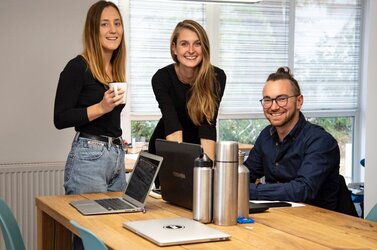
05.12.2019 | THD-Pressestelle - An der Technischen Hochschule Deggendorf (THD) interessieren sich immer mehr junge Menschen für eine berufliche Selbstständigkeit. Rund 50 Teams werden derzeit von den Experten des THD Startup Campus betreut. Alle verfolgen die Absicht, sich selbstständig zu machen oder haben den Schritt bereits gewagt. Passend zur bundesweiten Aktion „Gründerwoche Deutschland“ fand Ende November eine Infoveranstaltung an der Hochschule statt, um noch mehr Studierende auf das Thema Selbstständigkeit neugierig zu machen. Das Motto des Gründertags lautete „Wecke den Gründer in dir“.
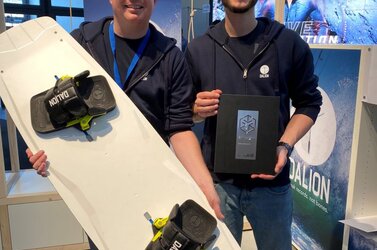
Zum vierten Mal fand der Gründertag an der TH Deggendorf statt und mit einem gefüllten Hörsaal B004 nahmen rund 150 Studierende an der Veranstaltung teil. Welche Unterstützung ein Startup an der THD erwartet, erfuhren die Studierenden vom Team des THD Startup Campus, von der Hans Lindner Stiftung durch Christian Schläger und vom ITC1/GZDN durch Thomas Keller. Zum Beispiel wurden kürzlich zwei Startups (Dalion, Lumoo) mit dem eXIST Gründerstipendium ausgezeichnet berichtet Alexander Böckl vom THD Startup Campus: „Die Bewerbung für das Stipendium läuft in Kooperation mit der Hochschule. Wir beraten und betreuen die Studierenden dabei. Während des gesamten Förderzeitraums bleiben wir regelmäßig miteinander in Kontakt.“
Zeit zum Austausch und Netzwerken unter Studierenden war beim Gründertag ebenfalls vorgesehen. Fünf Startups präsentierten ihre Ideen und suchten zum Teil noch nach Mitstreitern:
- OMNIA (Justen Deifel) - Digitale Identitäten Speicherung in der Blockchain
- Grünblatt (Waldemar Meier, Manuel Wedler, Nikunj Mathukiya) – Aquaponic, Autarkes Gemüsebeet mit Fischen für die Nährstoffversorgung
- Cucase (Dennis Gerdts, Marco Jülke, Anton Dobler) - Antibakterielle Handyhülle
- Dalion (Markus Zaglmann) - Neuartige Sicherheitsbindung im Wassersport
- Hackroboter (Andreas Stockinger) - Unkraut-Hackroboter namens HacklSepp
Studierende die sich beraten lassen oder Kontakt zu den genannten Startups aufnehmen möchten, können sich jederzeit an das Team des THD Startup Campus wenden. Prof. Dr. Thomas Geiß, Alfons Weinzierl und Alexander Böckl stehen per E-Mail unter startupcampus@th-deg.de als Erstkontakt zur Verfügung. Unterstützt wurde der Gründertag vom Career Service der Technischen Hochschule Deggendorf.
Bild (THD): Hochschul-Präsident Prof. Dr. Peter Sperber begrüßte die Studierenden beim Gründertag. Er betonte die Wichtigkeit des Themas Selbstständigkeit und dass die THD weiter in dieser Richtung unterstützen wolle.
Contact und more Information
Do you have any questions? We will be happy to answer them!